

Short answer: Musty-smelling washing is almost always caused by clothes drying too slowly, not by dirty clothes. When laundry stays damp for hours (on a clothes horse in an Irish winter, or forgotten in the drum), bacteria that survive the wash multiply and give off that sour, damp smell. The fix is to get clothes dry faster, keep your washing machine clean and never leave wet laundry sitting. Scent only helps once the damp problem is solved.
If you dry your washing indoors from October to March, you'll know the smell: towels that seemed fine on the airer but smell like a wet dog the moment you use them, or a jumper that comes out of the wardrobe smelling stale. Here's what's actually happening, and the nine changes that fix it.
What causes the musty smell on washing?
The smell comes from bacteria, not dirt. Researchers in Japan identified a bacterium called Moraxella osloensis as the main source of the "wet laundry" smell. It produces a compound (4-methyl-3-hexenoic acid) that smells sour and musty even at tiny levels. They found it on more than half of the towels, t-shirts, socks and pillowcases they tested, and it copes well with drying, which is why the smell survives the airer (Kubota et al., Applied and Environmental Microbiology, 2012).
Two conditions help it along:
- Slow drying. The longer fabric stays damp, the more time bacteria have to grow.
- A machine that's harbouring residue. The same research found the bacteria in washing machines too. Detergent drawers, door seals and filters that stay damp between washes can keep putting it back onto your clothes.
Why it's worse in Ireland in winter
Irish air is damp for much of the year, and once the line is out of action, most of us dry indoors. Cool, humid rooms mean clothes can take a day or more to dry on an airer, which is exactly the slow drying the bacteria need. The damp goes somewhere too: drying wet laundry indoors can raise damp levels in a home by around 30%, according to advice from Beko reported in the Irish Examiner. That extra moisture slows the next load down even more.
9 ways to stop washing smelling musty
- Take it out as soon as the cycle ends. If you're out during the day, use your machine's delay-end timer so the wash finishes when you're home rather than sitting wet for hours.
- Use the highest spin the fabric allows. Every bit of water the spin removes is water that doesn't have to evaporate on the airer.
- Don't overload the drum. An over-packed machine rinses and spins poorly, so clothes come out wetter and less clean.
- Give clothes space on the airer. Shake each item out and leave gaps between them. Hang thick items like towels and hoodies where air moves most freely, and turn them halfway through.
- Move the air. Dry in a room where you can open a window for 15 minutes or so, or run an extractor fan. Stale, still air keeps clothes damp.
- Use a dehumidifier if you can. Drying in a small room with the door closed and a dehumidifier running pulls the moisture out of the air, so clothes dry faster and the rest of the house stays drier.
- Clean the machine once a month. Run an empty maintenance or drum-clean wash following your manufacturer's instructions (most recommend a hot cycle). Pull out and rinse the detergent drawer, and wipe the rubber door seal where grime collects.
- Leave the door and drawer open between washes. Letting the machine dry out stops a damp, bacteria-friendly environment building up inside it.
- Wash towels and bedding hotter now and then. Check the care label, but these usually tolerate a 60°C wash, which is far tougher on odour-causing bacteria than a 30°C quick wash.
How to rescue towels that already smell
If a towel smells fine when dry but musty the moment it gets wet, the bacteria are still in the fibres. Re-wash it at the hottest temperature the care label allows, with a normal dose of detergent and nothing else in the drum to crowd it. Then dry it as fast as you can: a good spin, plenty of space, airflow or a dehumidifier. If the smell comes back, repeat the wash once more. Spraying or scenting a towel that still smells damp only covers the problem for a few minutes.
Does fabric softener stop the smell?
Not really. Softener adds a pleasant scent out of the machine, but it doesn't speed up drying or deal with bacteria. On towels it also coats the fibres, which can make them less absorbent over time. Fix the drying first. Once your washing dries properly, adding scent is the easy part.
Making dry washing smell good
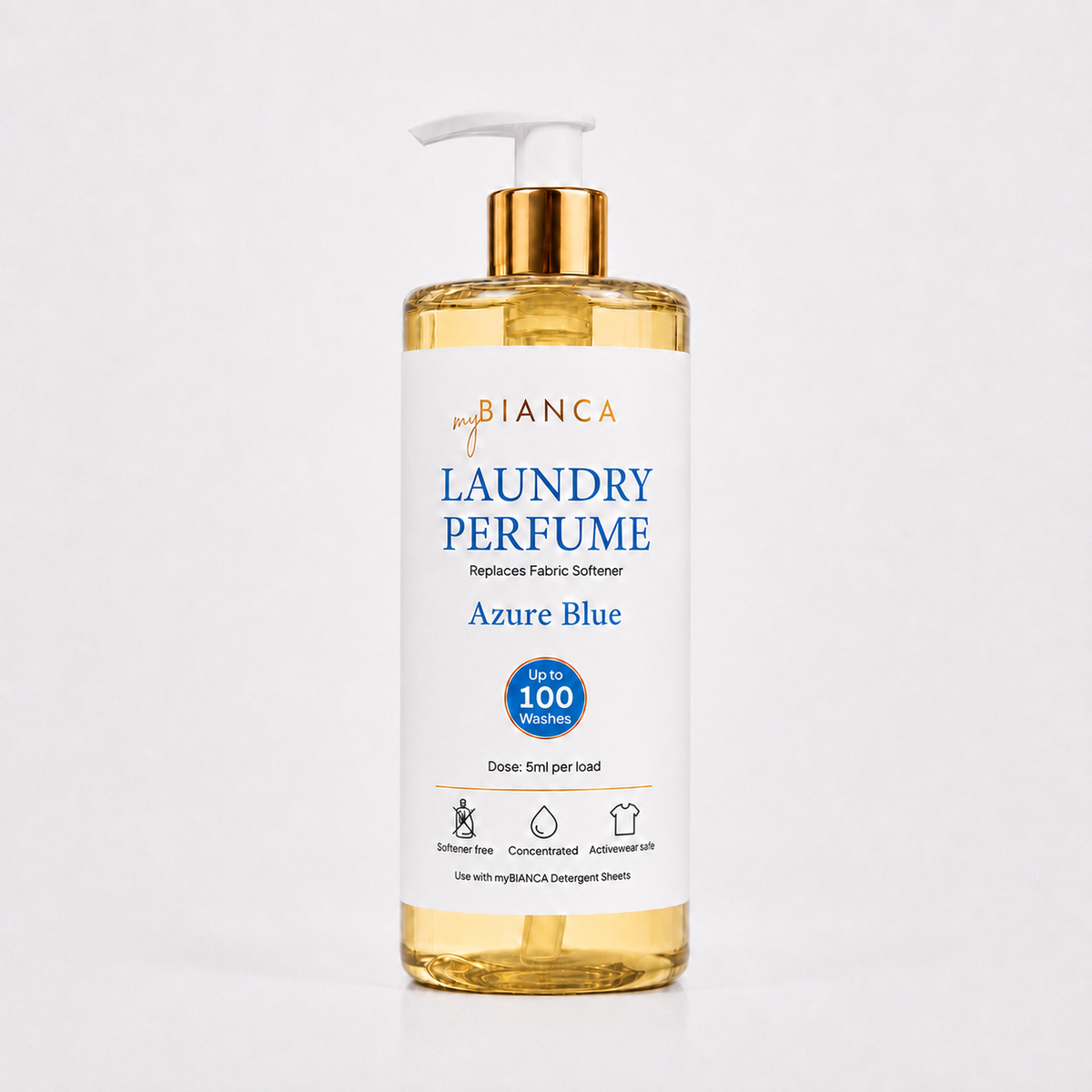
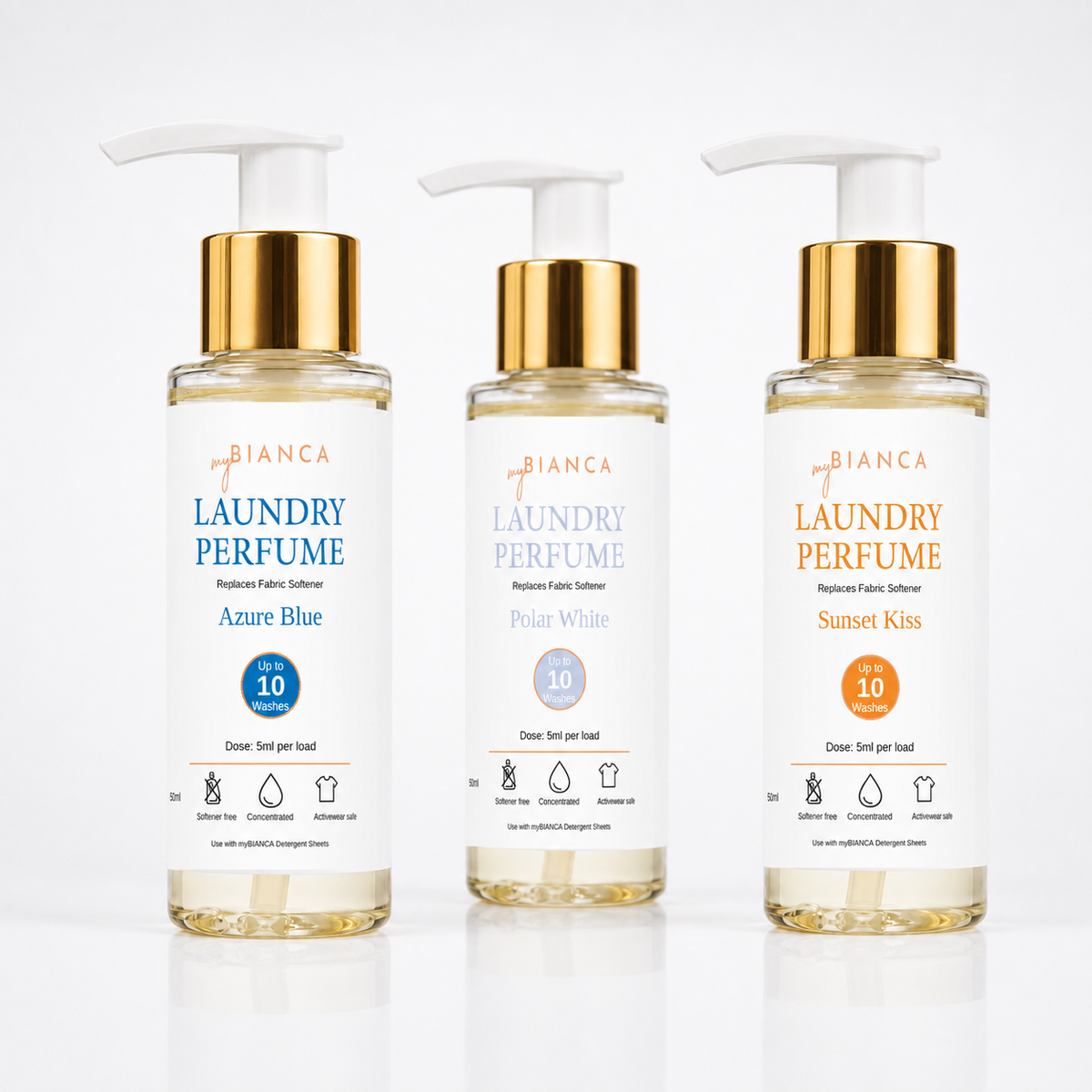
Once clothes are drying quickly, a laundry perfume gives you the fresh scent that softener promises. Add 5 ml (five pumps) of myBIANCA laundry perfume to the softener compartment alongside your usual detergent and wash as normal. It's silicone-free, and it's there for scent: it isn't a softener. If you're not sure which scent suits your house, the Discovery Bundle lets you try several, with detergent sheets and colour catchers included.
Frequently asked questions
Why do my clothes smell after drying indoors?
Because they dried too slowly. In cool, humid rooms clothes can stay damp long enough for odour-causing bacteria to multiply. Faster drying (a high spin, space on the airer, airflow or a dehumidifier) prevents it.
Why does my towel smell when it gets wet?
The bacteria that cause the musty smell survive drying and become noticeable again when the fabric is damp. A hot wash (as hot as the care label allows) followed by fast drying usually sorts it.
How long can I leave washing in the machine?
As little time as possible. The longer wet laundry sits in the drum, the more time bacteria have to grow. If you can't get to it straight away, set the delay-end timer so the cycle finishes when you're home.
Does a dehumidifier help dry clothes indoors?
Yes. It pulls moisture out of the air so clothes dry faster, and it stops that moisture settling into walls and windows as condensation.
Can I just spray musty clothes instead of rewashing them?
Not if the smell comes from damp. Scent can't cover bacteria for long. Rewash, dry quickly, then add fragrance to clean, dry washing.
Sources: Kubota H. et al. (2012), "Moraxella species are primarily responsible for generating malodor in laundry", Applied and Environmental Microbiology; "How to dry your clothes indoors without causing damp or mould in your home", Irish Examiner.
Written by Brendan Arthur, co-founder of myBIANCA, a laundry fragrance brand packed and shipped from Co. Meath.

Leave a comment
This site is protected by hCaptcha and the hCaptcha Privacy Policy and Terms of Service apply.